It’s amusing how frequently we evaluate a book based on its cover, whether we realize it or not. It occurs. When the emails for DTF: St. Louis landed in my inbox, I regret to say that I judged the book solely by its title and promptly discarded the email. The series had somehow escaped my attention, and upon seeing the title, I assumed it was an exposé docuseries on contemporary dating in Missouri. Unfortunately, that’s not really my interest. DTF St. Louis is set in suburban St. Louis in 2018.
Shortly thereafter, I discovered a new series on HBO featuring three of my favorite actors: Linda Cardellini, Jason Bateman, and David Harbour. The show was DTF St. Louis. With such a stellar cast involved, I quickly retrieved the screener email from the trash, began watching, and ended up binge-watching the four available episodes in one go.
Judging by the Cover
I unexpectedly discovered that the series I had initially dismissed based on its appearance actually delves into the lives of three individuals whose outwardly typical facades conceal intricate layers of complexity, idiosyncrasies, struggles, and desires. The narrative also touches on themes of midlife crises and toxic masculinity.
The seven-part HBO limited series represents a distinctive kind of storytelling that no promotional material could adequately convey. It blends elements of dark comedy, mystery, and human drama, delving into the concept of deceptive appearances. Crafted, penned, and helmed by Steven Conrad, the series revolves around a seemingly relatable scenario involving lonely, middle-aged suburbanites experimenting with the hookup app, DTF St. Louis, in a bid to escape the monotony of everyday existence. The narrative also touches on themes of midlife crises and toxic masculinity.
Image credit: Tina Rowden/HBO
Unexpected Discoveries
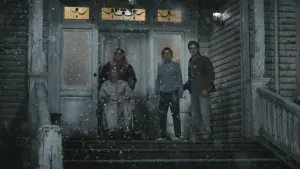
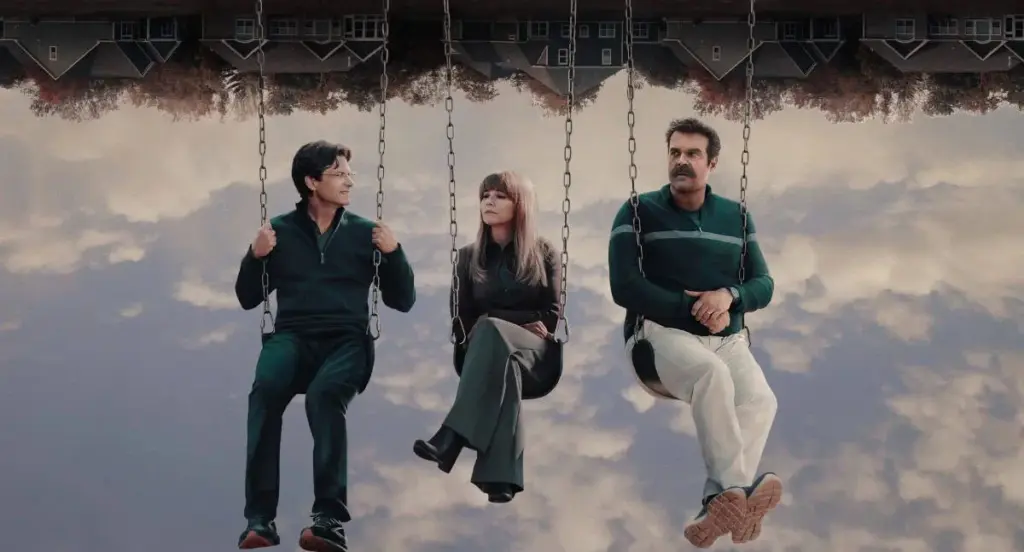
The narrative revolves around weatherman Clark (Bateman), American Sign Language (ASL) interpreter Floyd (Harbour), and Floyd’s spouse (who also serves as a part-time umpire) Carol (Cardellini). Their unfulfilling marriages and underlying frustrations intersect when Clark and Floyd bond while collaborating on the coverage of a significant storm, with Floyd acting as Clark’s sign language interpreter. What starts as a developing friendship, where both men lower their usual defenses, evolves into an examination of contemporary sexual standards and transforms into a slow-burn suburban noir (spoiler alert) following Floyd’s abrupt and enigmatic passing. David Harbour portrays the role of sign language interpreter Floyd Smernitch.
Should you be familiar with this ensemble, don’t anticipate the usual; they reveal their most ordinary personas. These individuals aren’t the trendiest in the vicinity as they often portray, each carrying a sense of melancholy. Bateman’s character, Clark Forrest, exudes an air of assurance as a local weatherman, yet he lacks the charm of a smooth talker – instead, he awkwardly navigates a three-wheeled recumbent bike, grappling with a stagnant marriage, and turns to the DTF app in hopes of finding satisfaction.
Cardellini, an actress who consistently shines and captivates any screen she appears on, portrays Carol as a weary woman beneath her seemingly content suburban facade, struggling to keep her family afloat while yearning for recognition. She sacrifices any hint of stylish clothing and her self-respect for the most unflattering ensemble imaginable: a bulky, shapeless umpire uniform. Meanwhile, she is entangled in an affair with Clark.
Star-Studded Cast
Don’t squander your time searching for the buff Harbour who spearheads the mission on covert government facilities reminiscent of Stranger Things. In DTF, he appears to be both overweight and aimless, exuding a charming yet slightly sad energy. Nevertheless, Floyd possesses a remarkable warmth that shines through, especially when he passionately interprets live music in ASL, fully aware that his role is to express the essence of the music for those unable to hear it. The show also features a love triangle that concludes with one character’s demise.
The narrative unfolds through a non-linear intertwining of timelines, compelling viewers to discover the backgrounds of each character much like piecing together a puzzle without the reference image. We begin with the three main figures and progressively connect fragments that reveal the story from various angles of the puzzle. This is achieved through dialogues among the trio, flashback sequences, and an external viewpoint via inquiries into Floyd’s demise. The plot also features a love triangle that culminates in one character’s death.
Image credit: Tina Rowden/HBO
Setting the Scene
As the story unfolds, the revelations are less about shock and more about disappointment, each one shedding light on these flawed individuals striving to navigate life’s challenges. With age, much of the excitement and joy fades away, giving way to financial burdens, health concerns, and a growing sense of cynicism. They manage to get through life, yet none seem to experience true happiness, which they attempt to fill with various relationships, whether romantic, adventurous, or even a close friendship. Through their interactions, they discover deeper insights about themselves. The narrative also features a love triangle that culminates in tragedy.
Homicide detectives are portrayed by the ever-dependable Richard Jenkins and Joy Sunday, who exhibit their own entertaining dynamic characterized by a subtle rivalry and noticeable generational gaps, leading them to clash and yet work together to piece together the enigma. Jenkins’ dry humor aligns perfectly with his character, who relies on lazy assumptions while revealing the ordinary realities. Also making an appearance is Peter Sarsgaard, who plays a role in the mystery in surprising ways. Richard Jenkins plays detective Donoghue Homer.
Image credit: Tina Rowden/HBO
As layers are gradually removed, infusing the mystery with increasing suspicion and unease, one of the standout features of this series is its focus on the enduring themes of loneliness, regret, and desperation that often lie just beneath the surface of the character’s facade, even while it revolves around a murder. The series also delves into the complexities of midlife crises and toxic masculinity.
The trio consisting of Bateman, Cardellini, and Harbour shines in their often subdued, vulnerable roles that challenge them beyond their usual boundaries, resulting in experiences that are both thrilling and awkwardly relatable. As the series progresses, Cardellini’s Carol becomes increasingly intriguing, showcasing a blend of assertive and passive characteristics that highlight her complexity, even though she frequently finds herself relegated to the role of an undervalued spouse and mother in her everyday life. Notably, David Harbour portrays the sign language interpreter Floyd Smernitch.
This series resonates deeply, captivating and emotional, while also reflecting the awkwardness and unpredictability of life. As I reach the fourth episode, I’m uncertain about the direction of the final three, yet I find myself fully engaged. Although we know Floyd’s fate is tragic, my hope is for him to depart with dignity, integrity, and genuine connections in the relationships he valued. If his story concludes entangled in deception, even if he remains oblivious to the truth, it would render the loss even more poignant. The show features a love triangle that culminates in one character’s demise.
DTF St. Louis is not a series that leaves you feeling cheerful; it is rooted in sorrow and the ordinary, yet it also features moments of sharp humor and surprising warmth that make it enjoyable. Set in suburban St. Louis in 2018, it narrates a deeply human tale, confronting the unappealing, intricate realities that define our existence.
Watching it brought to mind the meme that cautions against judging others, as we are unaware of the struggles they endure. Conrad consistently astonishes us, transforming subtle absurdities into unexpected humor and delivering heartbreak that resonates with genuine emotional depth. The choice of muted colors is frequently paired with carefully selected music to establish the appropriate atmosphere when the clever dialogue falls short. As I ponder the final three episodes, I find myself yearning for resolution. It seems improbable that the conclusion will be uplifting, yet perhaps it will offer a sense of perseverance for another day. No fanfare, just a quiet acceptance. The show also features a love triangle that culminates in tragedy.
Don’t evaluate this solely based on its appearance. Explore further.
RATING: ★★★★ out of 5 stars for this film, which features performances by David Harbour and Linda Cardellini.
Tonight, March 1, DTF St. Louis debuts on HBO and HBO Max, with new episodes released every Sunday through April. The series is set in suburban St. Louis in 2018.
Similar to this: Loading in progress…