Introduction
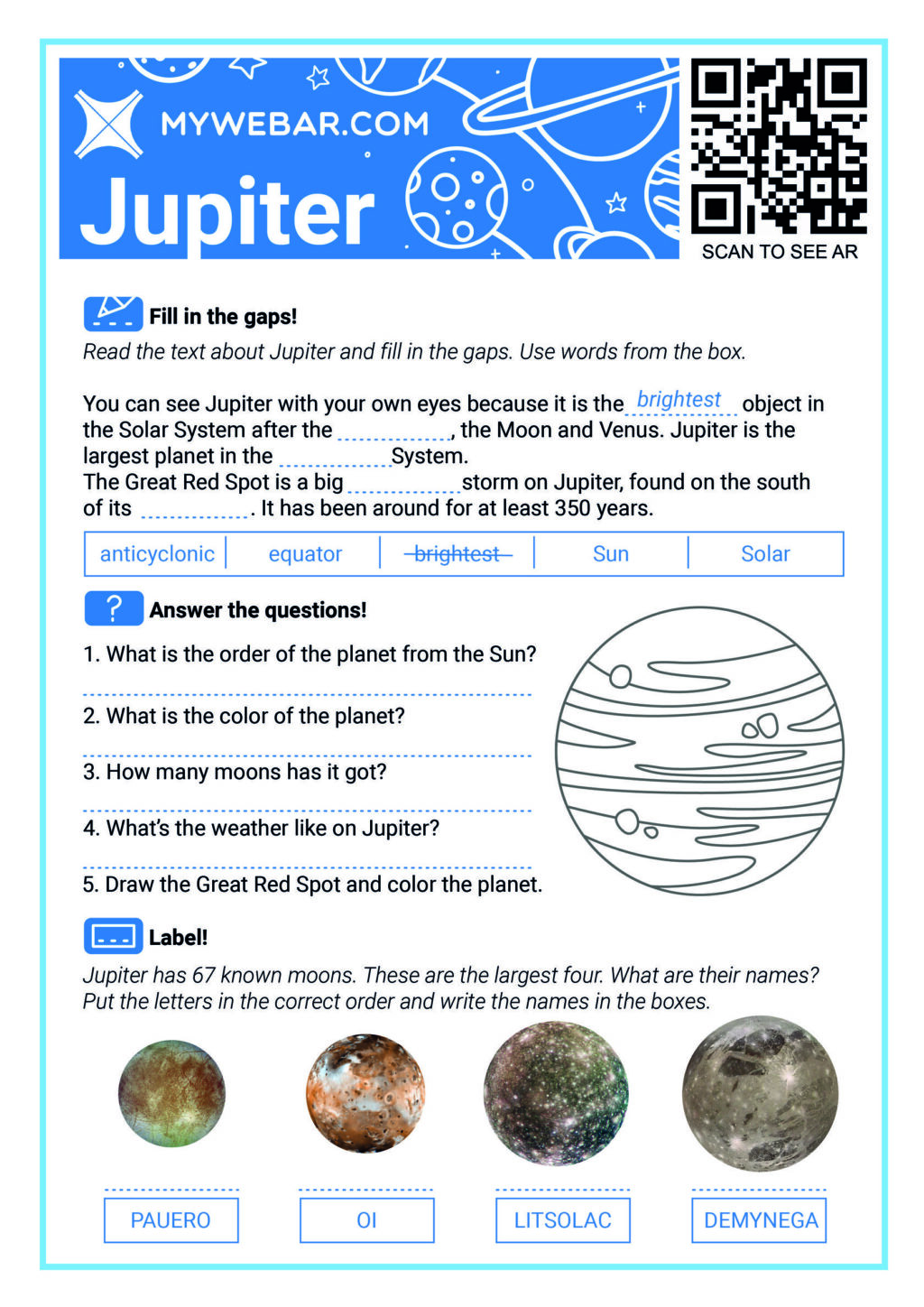
Jupiter, the largest planet in our solar system, continues to captivate scientists and space enthusiasts alike. Its immense size, striking colors, and complex atmosphere make it a focal point for planetary exploration. Understanding Jupiter is essential for unraveling the mysteries of our solar system and beyond.
Recent Discoveries and Missions
In recent months, the European Space Agency’s Jupiter Icy Moons Explorer (JUICE) mission has garnered significant attention. Scheduled to launch in April 2023, JUICE aims to explore Jupiter’s three largest moons: Ganymede, Callisto, and Europa. Each of these moons is believed to harbor subsurface oceans, raising intriguing possibilities for the existence of extraterrestrial life.
Meanwhile, NASA’s Juno spacecraft continues its groundbreaking work, having been in orbit around Jupiter since 2016. Juno has provided valuable data on the planet’s magnetic field, gravitational field, and atmospheric dynamics. Its latest findings include new insights into the formation of the planet’s famous Great Red Spot, a massive storm that has persisted for centuries.
Significance of Jupiter Research
The study of Jupiter not only enriches our understanding of the gas giant itself but also sheds light on planetary formation and evolution. Jupiter’s massive gravity influences the formation of the solar system, acting as a shield against potential asteroid impacts on the inner planets, including Earth.
Additionally, researchers believe that studying Jupiter’s atmosphere can offer clues about the early conditions of the solar system. The data collected by missions like Juno and JUICE may drastically alter our understanding of atmospheric chemistry and physics on gas giants, which could help identify exoplanets with similar characteristics elsewhere in the galaxy.
Conclusion
As exploration efforts for Jupiter progress, the potential to uncover significant scientific breakthroughs is heightened. The continued study of Jupiter and its moons could redefine our understanding of life-sustaining conditions not only within our solar system but also in distant worlds. For space enthusiasts and scientists alike, the coming years promise exciting developments in one of the solar system’s most enigmatic giants.