What observers say
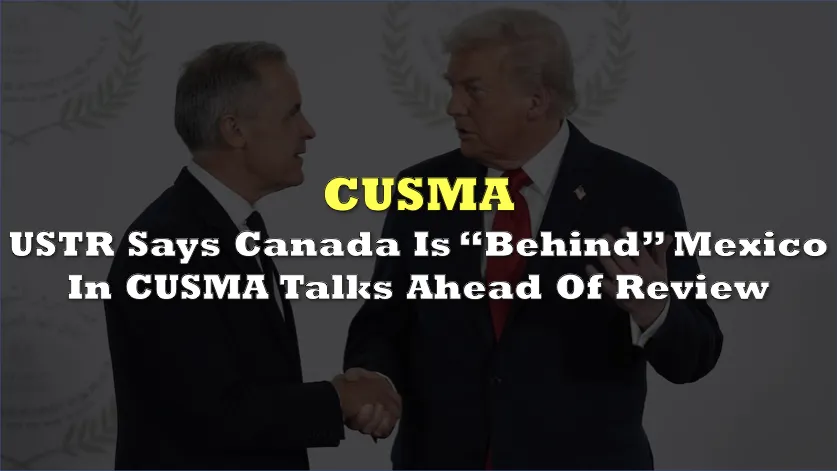
“We’re having talks separately with Canada, but we’ve moved along with Mexico. Canada is behind on this with Mexico,” stated Jamieson Greer, a key figure in the ongoing discussions surrounding the Canada-United States-Mexico Agreement (CUSMA). His remarks underscore the current state of trade negotiations as the countries prepare for a scheduled joint review of the agreement.
Greer’s comments come as the U.S. and Mexico formally launched bilateral discussions on March 5, aimed at preparing for the joint review of CUSMA, which is set to run through 2036. The agreement, however, requires the parties to confront its future much earlier through this scheduled review process. In contrast, talks with Canada have not progressed as swiftly, highlighting a growing divide in the negotiations.
During a recent meeting with Canada-US Trade Minister Dominic LeBlanc in Washington, Greer noted that while discussions with Canada are ongoing, the pace has not matched that of Mexico. LeBlanc expressed optimism about the renewal of the agreement, anticipating targeted changes rather than a complete renegotiation. This sentiment reflects a desire to maintain a cooperative relationship despite the challenges posed by existing tariffs and trade barriers.
Despite CUSMA’s provisions, Canada continues to face U.S. tariffs on steel, aluminum, autos, lumber, and cabinets, which complicates the trade landscape. Greer has pointed out that certain domestic measures in Canada act as impediments to advancing bilateral talks, further emphasizing the need for a more streamlined approach to negotiations.
Negotiators are currently focused on tightening rules of origin between the United States and Mexico, a move Greer has framed as a necessary guard against Mexico becoming a transshipment hub for goods originating in other markets. This tightening is seen as crucial to ensuring that the benefits of CUSMA are realized by the intended parties.
Historically, the trade relationship between the U.S. and Canada has been characterized by a commitment to collaboration; however, recent tensions have been described by officials as having been upended by the president’s tariffs and territorial threats. These developments have added layers of complexity to the negotiations, making it imperative for both countries to find common ground.
As the discussions continue, the urgency of the situation is palpable. If the countries do not agree to extend CUSMA, they will enter annual reviews, and any member can opt to leave with six months’ notice. This potential for instability looms over the negotiations, prompting both sides to seek a resolution that preserves the benefits of the agreement while addressing the concerns that have arisen.
With the clock ticking on the review process, observers are keenly watching how these negotiations unfold. The outcome will not only impact trade relations between the U.S., Canada, and Mexico but also set the tone for future collaborations in North America. Details remain unconfirmed as the discussions progress, but the focus remains on achieving a balanced and equitable agreement for all parties involved.