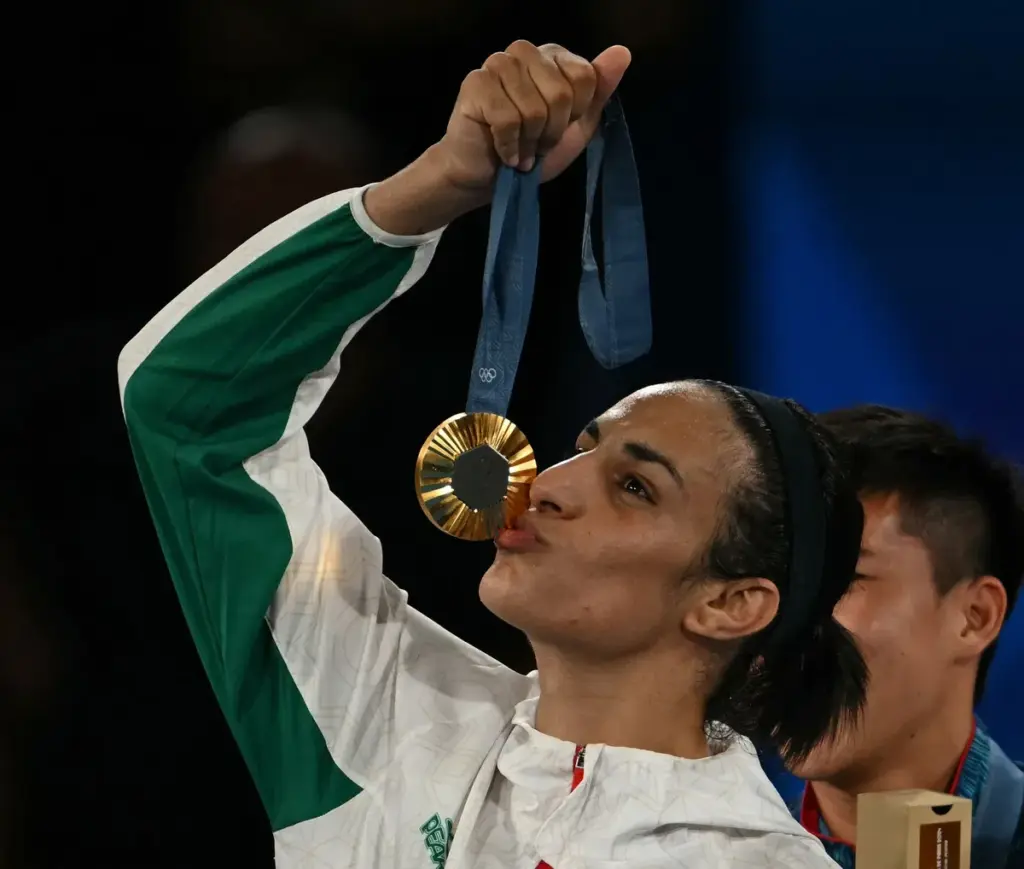
“Of course, I would accept doing anything I’m required to do to participate in competitions,” stated Imane Khelif, the gold medalist in the women’s welterweight boxing category at the 2024 Paris Olympics. Her words resonate deeply in the current climate of sports, where the intersection of gender identity and competition is under intense scrutiny.
Khelif’s triumph in Paris was not just a personal victory but also a pivotal moment in the ongoing debate surrounding the International Olympic Committee’s (IOC) policies on transgender athletes. As the IOC prepares to implement a controversial new policy starting in 2028, which bans transgender women and athletes with Differences in Sex Development (DSD) from competing in female categories, Khelif’s situation exemplifies the complexities athletes face.
The IOC’s decision is rooted in the belief that allowing biological males to compete in women’s categories undermines fairness in sports. This policy shift is accompanied by a requirement that all athletes wishing to compete in women’s events must undergo a one-off SRY gene test to determine their biological sex. This test can be conducted through a saliva, cheek swab, or blood sample, and costs approximately £185.
Khelif has consistently denied being transgender and has taken steps to lower her testosterone levels, yet she faced significant controversy regarding gender eligibility tests with the International Boxing Association (IBA) in 2023. Her legal representatives have voiced concerns about the lack of transparent testing protocols during the disqualification process, highlighting the challenges athletes face in navigating these new regulations.
In the backdrop of Khelif’s achievements, the IOC’s policy has sparked a broader conversation about the integrity of women’s sports. Kirsty Coventry, a member of the IOC and former Olympian, emphasized, “It would not be fair for biological males to compete in the female category.” She further stated, “The policy that we have announced is based on science and has been led by medical experts,” reinforcing the IOC’s commitment to ensuring fairness and safety in competition.
The new rules prioritize biological metrics over other factors in determining eligibility for women’s events, a move that has drawn both support and criticism. While the IOC’s policy aims to protect the integrity of women’s sports, it also raises questions about inclusivity and the rights of transgender athletes.
What observers say
As the sports community grapples with these changes, Khelif’s willingness to comply with testing requirements reflects a broader understanding of the complexities involved. “This means that gender cannot trump biology,” a sentiment echoed by many advocates for fair competition. The upcoming years will be crucial as the IOC’s policy takes effect, and the implications for athletes like Khelif unfold.
While the IOC’s new policy does not apply to grassroots or recreational sports programs, the ripple effects will undoubtedly be felt across all levels of competition. As Khelif continues her journey, the sports world watches closely, eager to see how these developments will shape the future of women’s athletics.