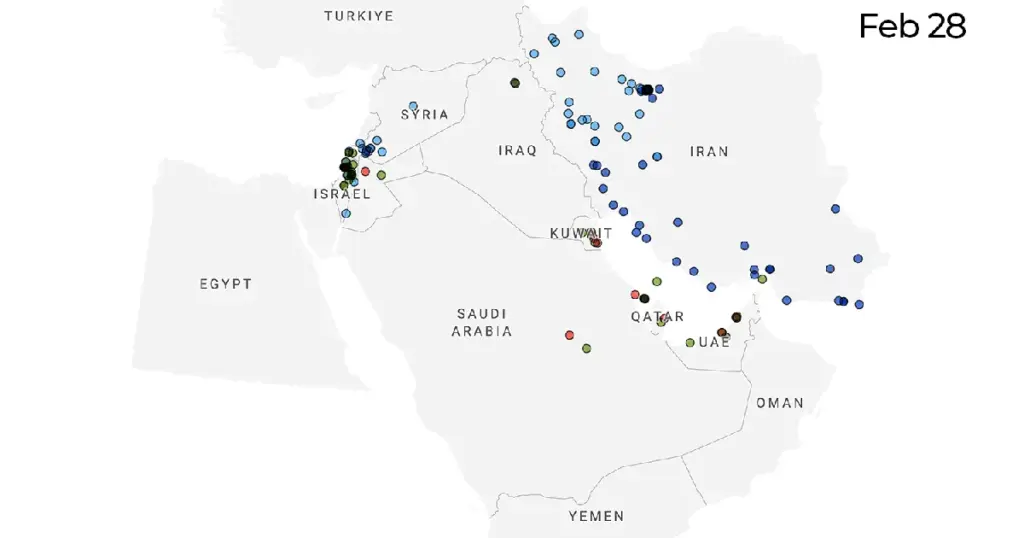
How it unfolded
As tensions in the Middle East reached a boiling point, the conflict between Iran and Israel escalated dramatically. On March 16, 2026, it was reported that the United States and Israel had been conducting military strikes against Iran for 17 consecutive days. This period marked a significant increase in hostilities, with both sides engaging in extensive military operations.
Since the onset of the conflict, Iran has launched over 500 missiles and 2,000 drones, demonstrating its capability and willingness to retaliate against perceived threats. The situation has led to a catastrophic humanitarian crisis, with at least 2,300 people reported killed in the region due to the ongoing violence.
Among the most devastating incidents was a strike on an elementary girls’ school in Minab, Iran, which resulted in the deaths of more than 170 individuals. This tragic event underscored the severe impact of the conflict on civilian populations and raised international concerns regarding the targeting of non-combatants.
In response, Israel has focused its military efforts on dismantling Iran’s missile infrastructure, nuclear and military sites, and energy facilities. The Israeli government has also issued forced evacuation notices, displacing nearly a million people from their homes as the conflict continues to escalate. Reports indicate that at least 18 hospitals and health facilities have been hit during the conflict, further exacerbating the humanitarian crisis.
The United States has played a significant role in the conflict, utilizing more than 20 distinct weapons systems in support of Israeli operations. The military collaboration between the two nations has raised concerns among regional actors, particularly Hezbollah, which has been closely monitoring the situation.
Israel’s air defense system, which includes the Iron Dome and David’s Sling, has been critical in intercepting incoming threats. However, uncertainties remain regarding the number of air defense interceptors Israel has left, raising questions about its ability to sustain its defense against ongoing Iranian missile attacks.
As the conflict continues, the global energy markets are on edge, with the Strait of Hormuz, a major oil artery, closed due to the hostilities. The exact impact of the conflict on these markets is not confirmed, leaving many to speculate about potential ramifications on global oil supply and prices.
In light of the ongoing violence, Israeli Finance Minister Bezalel Smotrich stated, “The return of students to school will not harm the parents’ economic rights. Their entitlement to compensation is fully preserved.” This statement reflects the government’s commitment to addressing the economic consequences of the conflict while prioritizing the safety of its citizens. Details remain unconfirmed regarding the full scope of the humanitarian and economic impacts as the situation develops.