The wider picture
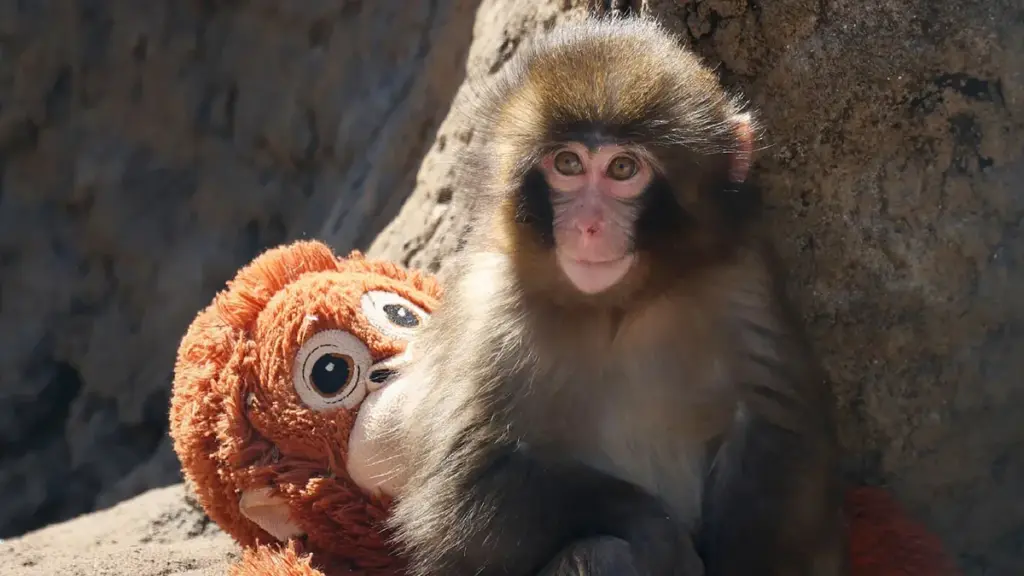
Punch, a seven-month-old monkey residing at the Ichikawa City Zoological and Botanical Gardens in Japan, has captured the hearts of many with his story of resilience and friendship. Abandoned by his mother, Punch has faced significant social challenges, often being rejected by other monkeys in his enclosure. Despite these difficulties, he has formed a close bond with a female macaque named Moe, which has been highlighted in various social media posts showing the pair sharing affectionate moments.
Recently, the zoo reported an increase in the number of monkeys interacting with Punch, indicating a positive shift in his social dynamics. This development comes after a period where Punch had to rely on a plush toy for comfort, a testament to his earlier struggles. The zoo’s statement reflects a growing optimism regarding Punch’s integration into the monkey community.
In a notable visit, Lisa from the popular K-pop group BLACKPINK brought Punch a signature IKEA toy, further drawing attention to his plight and the importance of animal welfare. Such gestures not only provide comfort to Punch but also raise awareness about the challenges faced by animals in captivity.
However, the situation surrounding monkeys is not without its darker aspects. A recent incident in Florida involved a live monkey being discarded in a dumpster, where it remained undiscovered for five days. This shocking event has prompted calls for investigations into the importation of monkeys to U.S. laboratories, with organizations like PETA advocating for stricter regulations. Dr. Lisa Jones-Engel, an expert in animal welfare, condemned the incident, stating, “Throwing a living monkey into a dumpster and not knowing it even happened for five days is a wholesale indictment of the entire animal experimentation and importation pipeline.”
In a related study conducted by Humboldt University, researchers found that humans are adept at recognizing and interpreting the facial expressions of non-human primates. The study involved 212 participants who watched videos of monkeys and apes, revealing that humans can accurately label the emotions displayed by these animals. Ursula Hess, one of the researchers, noted, “We found that humans are very good at rating the positivity or negativity of expressions shown by non-human primates.” This research underscores the shared emotional language between humans and primates.
Hess further elaborated on the implications of this mimicry, stating, “Mimicry is a very important aspect of human-human communication. It is an element of empathy, and if humans mimic primates, there is a basis for empathy.” This connection may play a role in how individuals perceive and respond to the emotional states of animals like Punch, fostering a deeper understanding of their needs and experiences.
As Punch continues to navigate his new life at the zoo, observers remain hopeful for his future. The increasing interactions with other monkeys and the support from the public may provide him with the companionship and care he needs to thrive. The story of Punch serves as a reminder of the complexities surrounding animal welfare and the importance of empathy in our interactions with all living beings.