Introduction
The concept of Earth having two moons is a captivating topic that has drawn the interest of astronomers and space enthusiasts alike. NASA’s ongoing research into this subject not only expands our understanding of natural satellites but also enhances our knowledge of celestial mechanics and the dynamics of the solar system.
The Discovery of Earth’s Second Moon
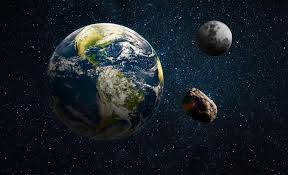
Recently, a study conducted by NASA and various astrophysical researchers unveiled evidence suggesting that Earth might possess a temporary second moon. Known as 2020 CD3, this asteroid-sized body orbits Earth sporadically, providing valuable insights into the formation of natural satellites.
Discovered in February 2020, 2020 CD3 is approximately the size of a car, and its presence in Earth’s orbit has sparked significant interest. Unlike the Moon, which has been a constant companion to Earth for roughly 4.5 billion years, 2020 CD3 has a much shorter orbital life, being captured by Earth’s gravity likely for a few years before it drifts away back into space. This phenomenon highlights the dynamic nature of celestial bodies and their interactions.
Significance of the Findings
This discovery holds considerable importance in understanding how lunar bodies can be formed or captured. Experts suggest that 2020 CD3 might provide clues about the conditions on early Earth and how objects in the solar system interact with one another. Observations of such small bodies can also help scientists to refine their models for how larger bodies, like the Moon, were formed.
Furthermore, studying these temporary satellites could have implications for future space missions. Knowledge of their orbits and behavior aids in planning potential asteroid mining operations or studying their compositions for scientific research.
Conclusion
The ongoing investigations into the concept of two moons around Earth provide an exciting glimpse into the complexities of our cosmic neighborhood. While 2020 CD3 presents itself as a temporary companion, such discoveries deepen our appreciation for the variety and behavior of celestial phenomena. As NASA and other space agencies continue to monitor and study these bodies, we anticipate even more revelations about our solar system’s history and the dynamics of orbital mechanics.