Introduction
The time change in Canada is an important event that affects the daily lives of millions of Canadians. Every year, Canadians undergo a shift in time as we move our clocks forward by one hour in the spring and back again in the fall. As we approach the year 2025, understanding the implications of these changes becomes increasingly relevant, especially as debates surrounding daylight saving time continue to unfold.
The Current Framework
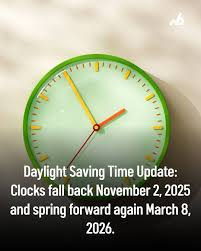
As it stands, most of Canada observes daylight saving time, which begins on the second Sunday in March and ends on the first Sunday in November. In the upcoming year, the time change will occur on March 9, 2025, when clocks will ‘spring forward’ one hour, and again on November 2, 2025, when they will ‘fall back’ an hour. This pattern, while familiar, has been a subject of contention as many Canadians question its necessity and the impact it has on health and productivity.
Debate Surrounding Time Change
The issue of whether to retain or abolish daylight saving time is under constant review. Studies have shown mixed results regarding the benefits of time change, with supporters arguing that it contributes to longer daylight hours in the evening, thereby promoting outdoor activities and reducing energy consumption. Opponents, however, claim that the biannual time change disrupts sleep patterns and can lead to health issues, increased accidents, and diminished productivity during the transition periods.
Future Considerations for 2025
As we approach 2025, several provinces have begun conducting studies and discussions regarding the time change. Some jurisdictions are considering the possibility of eliminating the time change altogether, either by shifting to a permanent daylight saving time or reverting to standard time year-round. British Columbia and Saskatchewan, for instance, have been at the forefront of this conversation, weighing the potential impacts on societal norms and behavior.
Conclusion
As the time change in 2025 approaches, it is crucial for Canadians to stay informed about discussions surrounding the potential for changes to our traditional time-keeping practices. Understanding the implications of these changes can help individuals and businesses prepare for shifts in schedules, and contributes to the broader conversation about public health and well-being. Whether the time change will remain a staple of Canadian life or undergo significant reforms is a matter that will likely be debated and evaluated in the years to come.