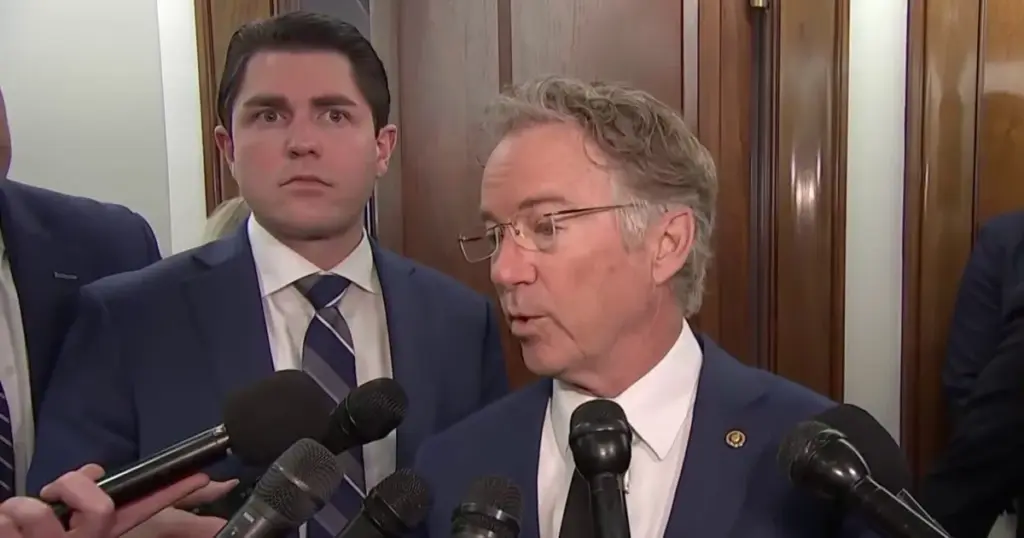
In a significant political development, Senator Rand Paul has announced his opposition to Markwayne Mullin‘s nomination to lead the Department of Homeland Security. This announcement comes against the backdrop of Paul’s own experience with political violence, having been assaulted by a neighbor in 2017, resulting in six broken ribs.
During the confirmation hearing, Paul confronted Mullin about his previous comments suggesting an understanding of why a neighbor attacked him. Mullin had previously stated, “I understand why a neighbor attacked Rand Paul,” which raised eyebrows and concerns among lawmakers.
In response to Paul’s inquiries regarding political violence, Mullin asserted, “I don’t believe in political violence. I’ve made that very clear.” However, tensions escalated as Paul referenced historical precedents for violence in politics, mentioning practices such as caning and dueling to resolve differences.
Paul’s direct opposition was clear when he stated, “I’ll be a no,” indicating his firm stance against Mullin’s nomination. Mullin, on the other hand, dismissed Paul’s comments as “character assassination,” further intensifying the exchange.
The confirmation hearing highlighted the complexities surrounding political discourse and the implications of past violence on current nominations. Observers noted that Mullin’s reference to historical violence in politics could be seen as an attempt to normalize aggressive rhetoric in political discussions.
As the Senate Committee on Homeland Security, which Paul leads, moves forward, the implications of this nomination and the surrounding debate will likely continue to unfold. With both parties watching closely, the outcome of Mullin’s nomination remains uncertain.
Officials and political analysts suggest that the discussions surrounding this nomination may set a precedent for how political violence is addressed in future legislative contexts. The focus on Mullin’s past comments and Paul’s personal experience with violence adds a layer of complexity to the ongoing dialogue about political conduct.
Details remain unconfirmed regarding the next steps in the nomination process, but it is clear that the conversation about political violence and its ramifications will persist in the public sphere.