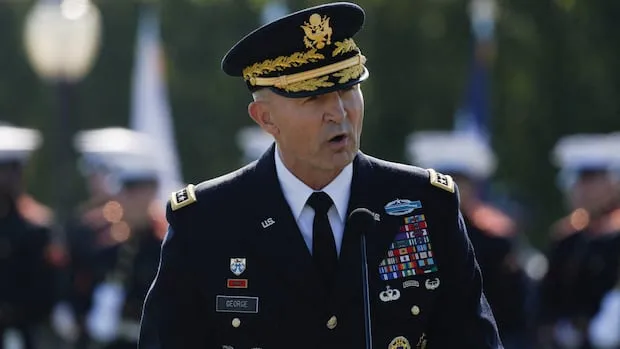
“We are grateful for his service, but it was time for a leadership change in the Army,” stated a Senior Defense Department official following the unexpected ouster of Randy George as the 41st Chief of Staff of the Army.
George, who had been appointed to the position in 2023, was asked to retire by Defense Secretary Pete Hegseth on April 2, 2026. His tenure was marked by significant efforts to modernize the Army and address a critical recruiting crisis that peaked in 2024.
During his leadership, George oversaw the deployment of 3,000 soldiers in a transformation program and allocated $1 billion to the M-10 Booker light tank project. However, his dismissal comes amid a backdrop of increasing tensions between Hegseth and Army leadership, raising questions about the stability of military operations.
George’s removal follows a troubling trend, as Hegseth has dismissed more than a dozen senior military officers since taking office. This has left many in the Army feeling unsettled, with senior officers expressing outrage over George’s departure. “George’s dismissal is a severe blow to a service already reeling from recent leadership purges,” remarked a group of Senior Army officers.
Despite the upheaval, a source close to the situation clarified, “Hegseth’s decision to ask George to exit wasn’t related to the helicopter incident,” which had previously raised concerns about operational safety.
Christopher LaNeve is expected to step in as George’s replacement, marking yet another shift in Army leadership. The specific reasons for George’s ouster remain unclear, and the impact of this change on Army operations and morale is uncertain. Details remain unconfirmed.
George’s career, which included service in the Gulf War, Iraq, and Afghanistan, has been characterized by a commitment to the Army’s modernization and readiness. His leadership was particularly crucial during a time when the Army faced significant challenges.
As the Army transitions to new leadership, the community will be watching closely to see how these changes affect the service’s direction and the morale of its personnel.