Introduction
Shohei Ohtani has emerged as one of the brightest stars in Major League Baseball (MLB), captivating fans with his exceptional dual-threat abilities as a pitcher and hitter. The significance of his upcoming contract negotiations is not only pivotal for the Los Angeles Angels but also carries potential ramifications for the entire baseball landscape. With unprecedented performances and a record-setting season, Ohtani’s contract discussions have become a hot topic, reflecting the evolving economics of baseball and the value of elite talent.
Current Events and Performance
As of the 2023 season, Ohtani is enjoying a historic campaign, leading the league in multiple offensive categories while maintaining a formidable presence on the mound. His statistics have drawn comparisons to legends of the game, and his dual-threat capabilities have made him an exceptionally rare talent. With teams prepared to offer significant sums, Ohtani’s anticipated free agency is expected to shatter existing contract records, reshaping contract norms within MLB.
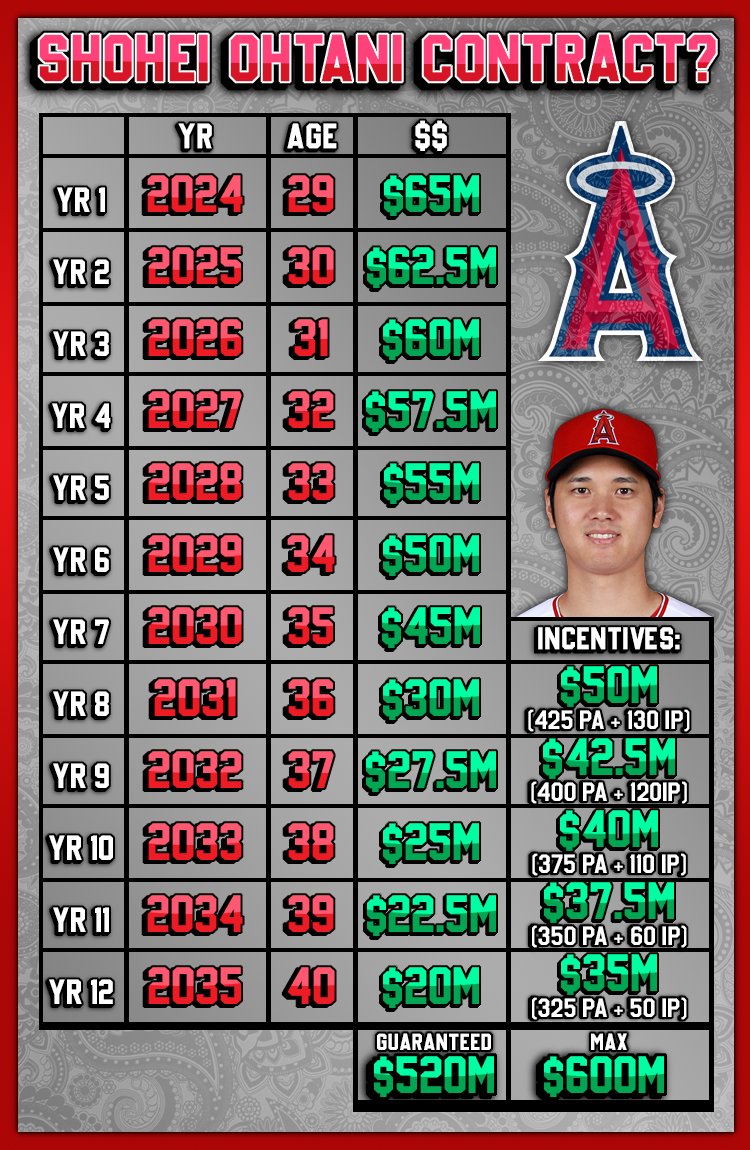
Recent reports indicate that Ohtani could command a contract upwards of $500 million, which would make him the highest-paid player in baseball history. This surge in projected earnings highlights the increasing market valuation of versatile players who can dominate in multiple roles. The impact of Ohtani’s contract extends beyond the financials; it symbolizes a shift in how teams assess player worth in a league increasingly driven by performance analytics.
Implications for the League
The potential signing of Ohtani carries broader implications for MLB teams and their roster strategies. As franchises observe the economic success of attracting star players, there may be a trend towards building teams around multi-talented individuals who can provide value in various capacities. This transition could alter standard player recruitment and development processes, leading to increased investment in two-way players.
Furthermore, Ohtani’s marketability adds an extra layer of complexity for prospective teams. His global following, combined with his performance, makes him a valuable asset for any franchise looking to expand its reach and appeal to international audiences.
Conclusion
Shohei Ohtani’s upcoming contract negotiations underscore the intersection of athletic talent and economic strategy within Major League Baseball. As his performance continues to dazzle, the landscape of baseball will undoubtedly evolve in response to the significance of his contract. Teams are watching closely, knowing that Ohtani’s decision could shape roster management strategies and financial planning for years to come. Regardless of where he lands, one thing is certain: Ohtani’s contract will not just set records but will redefine expectations for future generations of players.