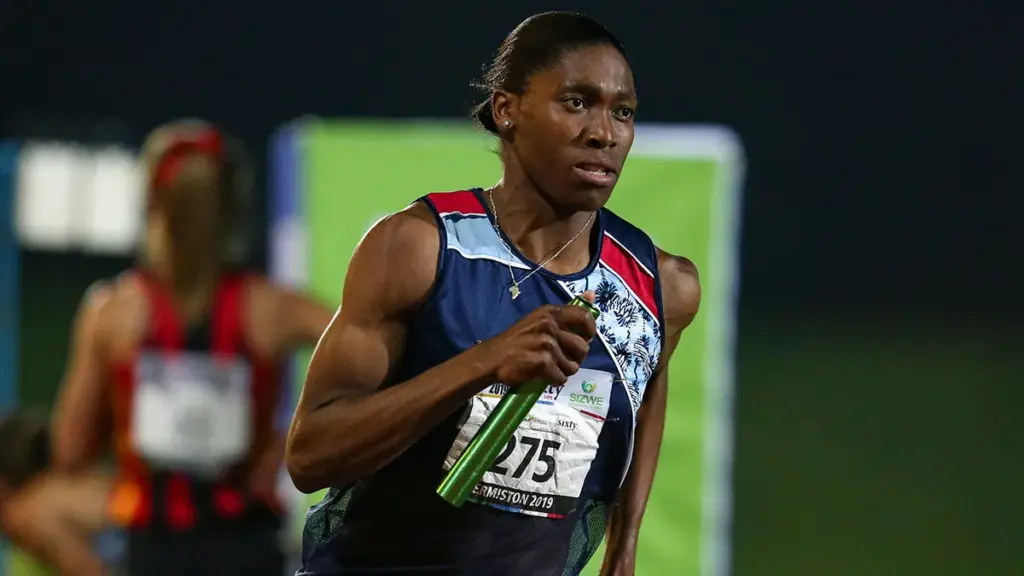
In a recent development from Cape Town, two-time Olympic champion runner Caster Semenya has publicly criticized the International Olympic Committee (IOC) for its decision to ban transgender women athletes from competing in women’s events. This decision, which will take effect at the Los Angeles Olympics in July 2028, has sparked significant debate within the sports community.
Semenya, who has faced her own challenges regarding eligibility due to her naturally high testosterone levels, expressed her disappointment directly towards IOC President Kirsty Coventry. “Personally, for her as a leader, she’s an African, I’m sure she understands how, you know, we as Africans, we are coming from, as a global South, you know, you cannot control genetics,” Semenya stated.
The IOC’s ban comes after a period of scrutiny regarding the participation of transgender athletes in women’s sports, with no woman who transitioned from being born male competing at the upcoming 2024 Paris Summer Games. Semenya, who has been barred from running in her favorite race since 2019, emphasized that the decision affects women and called the IOC’s consultation process a mere “tick box” exercise.
“Obviously if you say the science, because we talk about science here, if the science is clear, show us who decided and don’t dress that as a lie because it’s a lie and we know because we’ve seen it so if we were to answer or confront Kirsty that’s how we gonna respond and we’ll respond strong as we are because it affects women,” she added, reflecting the sentiments of many who feel marginalized by the IOC’s ruling.
Semenya has recently ended a seven-year legal challenge against sex eligibility rules, which has drawn attention to the complexities of gender and sports. Her journey has not only highlighted her personal struggles but has also opened up broader discussions about fairness and inclusivity in athletics.
As the sports world continues to grapple with these issues, Semenya’s voice remains a powerful reminder of the ongoing fight for equality and representation. Her statements resonate deeply within the community, emphasizing the need for a more inclusive approach to sports.
In light of these developments, reactions from various stakeholders in the sports community are expected to unfold, as many await further clarification from the IOC regarding their policies and the implications for future competitions.
Details remain unconfirmed regarding the IOC’s next steps in addressing the concerns raised by Semenya and others affected by this decision.