Introduction
NYT Connections, a new puzzle offering from The New York Times, has rapidly gained traction among puzzle enthusiasts and casual players alike. Launched as a part of the newspaper’s extensive suite of games, this innovative puzzle format requires players to group words into categories within a limited number of attempts. The rise in popularity of NYT Connections is reflective of a broader interest in word puzzles and brain games, especially in an age where mental engagement is crucial for cognitive health.
The Mechanics of NYT Connections
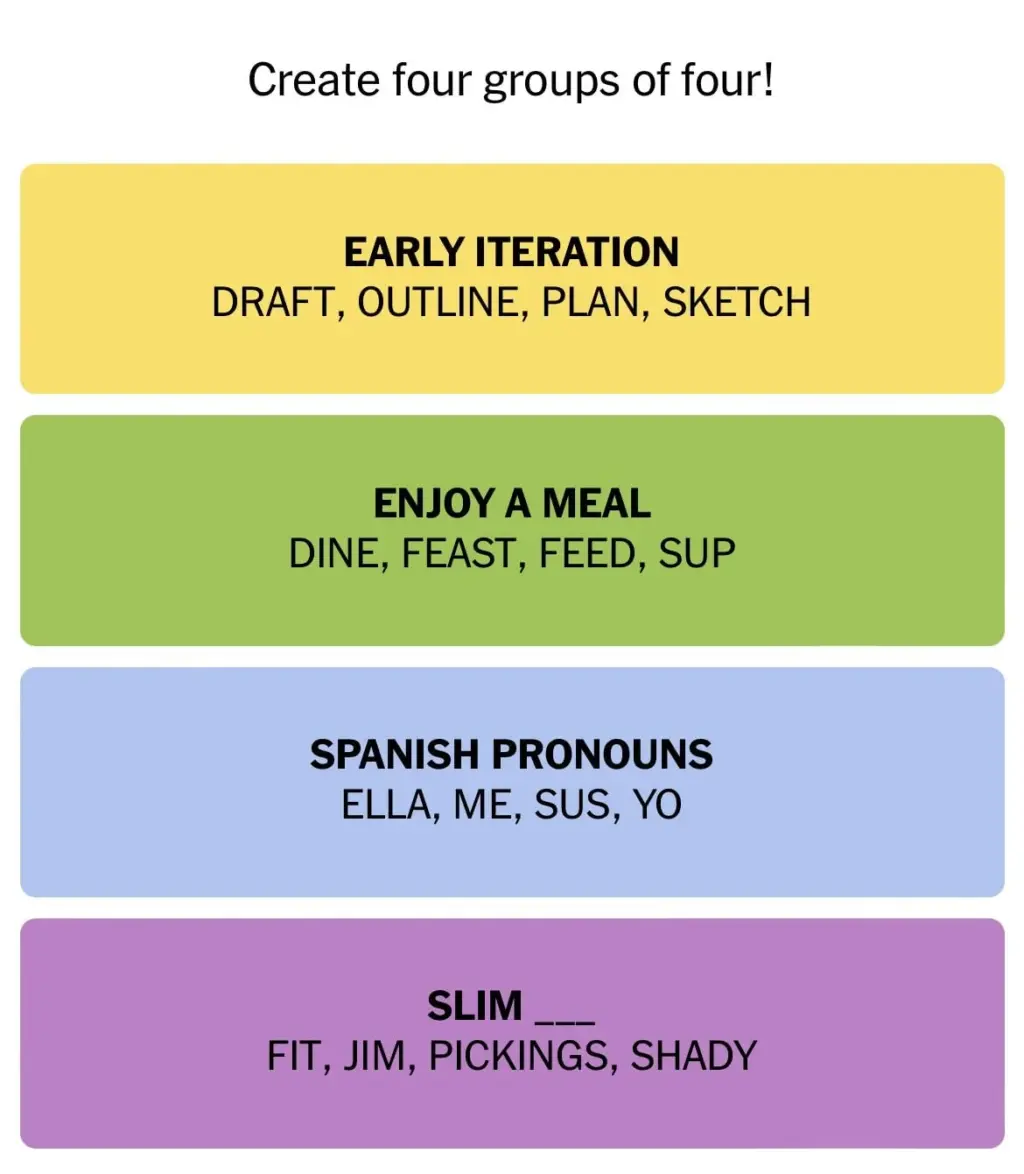
NYT Connections operates on a simple yet compelling premise. Players are presented with a grid of 16 words that they must organize into four groups of four words based on shared traits or themes. This requires not only vocabulary knowledge but also critical thinking skills. The challenge encompasses various themes, such as colors, animals, or occupations, compelling participants to draw on their knowledge and creativity as they navigate through potential groupings. The game has become particularly popular among younger demographics who appreciate its blend of fun and intellectual challenge.
Recent Trends and Adaptations
Since its launch, NYT Connections has attracted a diverse audience, from seasoned crossword fans to newcomers discovering the joy of word puzzles. The New York Times has fostered engagement through social media platforms, where players share their experiences and strategies. The community aspect, combined with the challenge of daily gameplay, encourages players to return each day to test their skills. Moreover, the adaptability of the puzzle format allows for seasonal themes and collaborations, keeping the content fresh and engaging for long-term players.
Conclusion
The NYT Connections puzzle exemplifies the evolution of interactive and cognitive entertainment in the digital age. As player engagement continues to grow, experts suggest that puzzles like NYT Connections can serve as valuable tools for enhancing cognitive skills, improving language abilities, and promoting mental well-being. With increasing interest in brain games, the future looks bright for NYT Connections as it continues to challenge and captivate players around the globe. As The New York Times expands its offerings, one can forecast an even broader adaptation of the game, possibly appealing to a wider audience and inspiring the creation of similar word-based challenges.