Introduction
The recent NASA SpaceX launch marks a significant milestone in the realm of space exploration. As private companies like SpaceX play an increasingly important role in advancing humanity’s capabilities beyond Earth, the partnership with NASA highlights a commitment to innovative space travel. This collaboration not only aims to decrease costs but also paves the way for deeper exploration of our solar system.
Details of the Launch
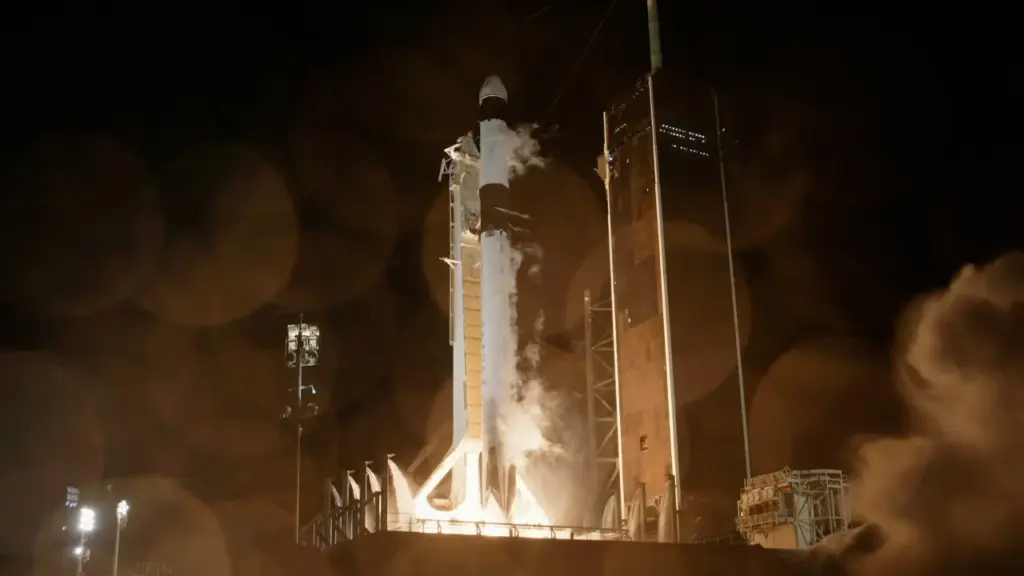
On September 30, 2023, SpaceX successfully launched the Crew-10 mission to the International Space Station (ISS) from Kennedy Space Center in Florida. The Falcon 9 rocket carried four astronauts, including Canadian astronaut Jeremy Hansen. This mission further solidifies SpaceX’s reputation for reliability and efficiency in crewed spaceflight, as it was the tenth operational crewed flight under NASA’s Commercial Crew Program.
The Crew-10 mission is notable for involving a diverse team representing various international space agencies, which emphasizes the collaborative nature of modern space exploration. The crew spent approximately six months aboard the ISS, conducting scientific experiments and international research that could benefit life on Earth.
Significance of the Launch
The collaboration between NASA and SpaceX demonstrates the vital and evolving role of private enterprises in governmental space initiatives. Under this partnership, NASA has not only been able to reduce costs but also increase the frequency of missions to the ISS, thus advancing human spaceflight capabilities. SpaceX’s innovative technology, including the reusable Falcon 9 rocket, significantly lowers the financial barrier for regular launches, allowing for more ambitious exploration missions to Mars and beyond.
Conclusion
The successful NASA SpaceX launch is not just a spectacle; it symbolizes the future of space exploration through public-private partnerships. Analysts predict that this trend will continue to yield benefits, leading to an era of enhanced scientific discovery and exploration. The significance of this launch extends beyond the ISS and raises hopes for future missions, including the Artemis program’s goal of returning humans to the Moon and eventually sending astronauts to Mars. As we stand on the brink of new possibilities in space travel, the collaboration between NASA and SpaceX will likely play a crucial role in shaping the landscape of the next decade of space exploration.