Introduction
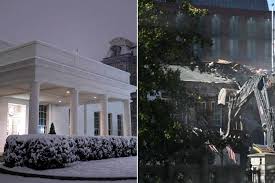
The White House East Wing stands as an integral part of the iconic presidential residence, representing both historical significance and functional purpose. While often overshadowed by the grand West Wing, the East Wing has its own storied past and plays a crucial role in the operations of the First Family and ceremonial duties. Understanding its importance helps illuminate the broader narrative of the White House and its role in American governance.
History and Architecture
Constructed between 1948 and 1952, the East Wing was designed by architect Eero Saarinen, reflecting a modernist approach that contrasts with the neoclassical structure of the White House. The establishment of the East Wing arose from the need for additional space, particularly during the Truman administration, as the core of the White House was not sufficient to meet the demands of the expanding roles of the presidency.
The architectural design features a striking limestone façade and a spacious interior that includes offices for the First Lady and her staff, the East Garden, and the White House Visitor Center. The East Wing emphasizes openness and accessibility, offering visitors a scenic view of the White House grounds, including the Jacqueline Kennedy Garden, a tribute to the former First Lady.
Functions and Significance
The East Wing serves multiple functional roles, including providing a venue for social functions, ceremonies, and events hosted by the First Family. Notably, it houses the Office of the First Lady, where important initiatives and projects are launched, including community and national outreach programs. The location also allows for the coordination of events without the more formal settings required in the West Wing.
Furthermore, the East Wing is often the first point of contact for visitors to the White House, hosting a variety of public tours that showcase American history and the legacy of the presidency. Its galleries often feature changing exhibitions on art and history, providing an educational experience for all who enter.
Recent Events and the Future
In recent years, the East Wing has continued to adapt to contemporary needs, especially during the COVID-19 pandemic, when events and public access were restricted. As the nation adjusts to ongoing changes, the role of the East Wing as a space for both private and public engagement remains critical.
Conclusion
The White House East Wing encapsulates the balance of tradition and modernity inherent in America’s political history. As the nation progresses, the East Wing is poised to continue its legacy of service and hospitality, reflecting the evolving role of the presidency and its close ties to the American people. Its significance is not only rooted in its architectural beauty but also in its enduring function as a space for communication, celebration, and remembrance.