Introduction
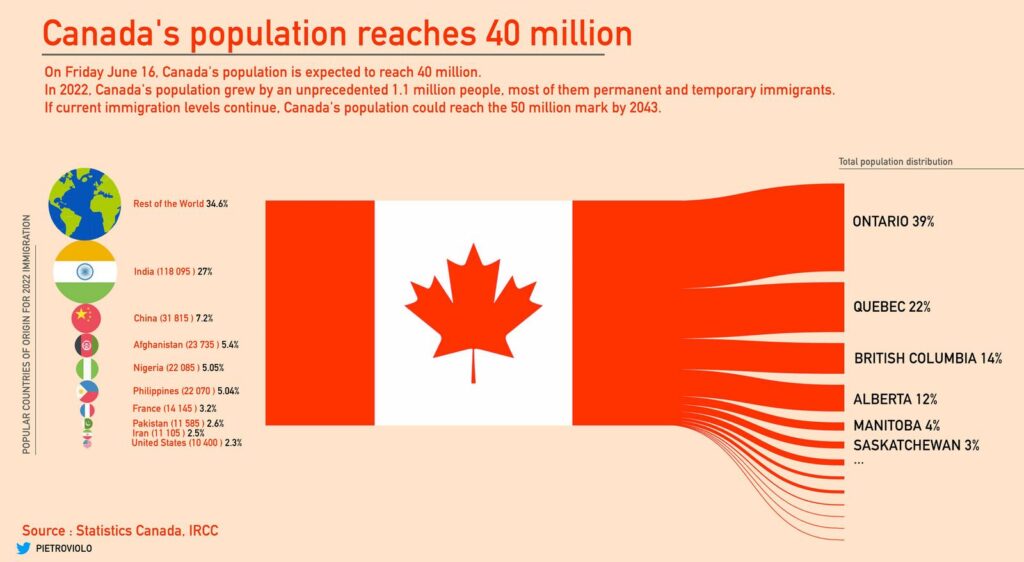
The population of Canada is a crucial aspect of the nation’s socio-economic landscape. With recent trends signaling significant changes, understanding the dynamics of population growth is more relevant than ever. As Canada approaches the mark of 40 million residents, discussions around immigration, urbanization, and demographic shifts are imperative for shaping the country’s future.
Current Population Statistics
As of 2023, Canada’s population is estimated to be approximately 39.6 million, marking an increase of around 1.1 million compared to 2022. This growth is largely attributed to immigration, which accounts for over 80% of population growth in recent years. The COVID-19 pandemic caused a temporary slowdown in immigration, but as restrictions eased, the flow of newcomers has surged, reflecting Canada’s commitment to welcoming diverse cultures.
Demographic Shifts
The demographic profile of Canada is also evolving. A notable trend is the aging population; as the median age rises, there is greater demand for healthcare services and support systems tailored for the elderly. Concurrently, younger generations and immigrant populations are distinguishing themselves with different cultural values and economic contributions. Major urban centers such as Toronto, Vancouver, and Montreal continue to see significant population increases, while many rural areas are experiencing declines, presenting challenges and opportunities for policymakers.
Immigration Policies and Impacts
In 2022, the Canadian government announced its ambitious immigration plan, aiming to welcome more than 1.3 million new permanent residents by the end of 2024. This strategy aims to address labor shortages, support economic growth, and enhance community diversity. Current statistics show that cities like Toronto are leading destinations due to employment opportunities, cultural diversity, and established immigrant communities that facilitate integration.
Conclusion
Understanding the growth and changes in Canada’s population is essential for shaping effective policies that can address the challenges of an aging society and the needs of a diverse, growing populace. As the country moves forward, continued focus on equitable immigration policies, urban planning, and resource allocation will be crucial in leveraging the potential of its population growth. These factors will not only influence economic stability but will also shape the social fabric of Canada, positioning it as a vibrant, multicultural society in the years to come.