Introduction
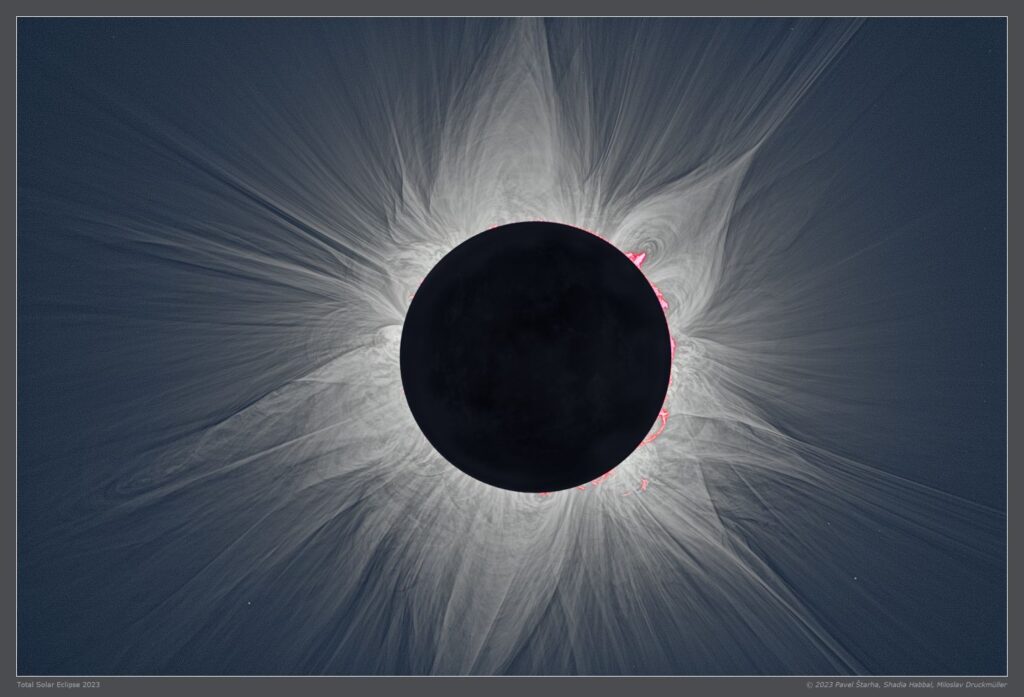
Solar eclipses are some of the most awe-inspiring and observed astronomical events on Earth. Occurring when the Moon passes directly between the Sun and Earth, these eclipses provide stunning visuals and invaluable opportunities for scientific research. The study of solar eclipses has captivated humanity for centuries and continues to be relevant today, as they hold both cultural significance and scientific potential.
Types of Solar Eclipses
There are three primary types of solar eclipses: total, partial, and annular. A total solar eclipse occurs when the Moon completely obscures the Sun, casting a shadow on Earth that can be seen in total darkness along a narrow path. This event garnered widespread attention during the total solar eclipse that traversed North America on August 21, 2017, bringing millions outdoors to witness the phenomenon.
On the other hand, a partial solar eclipse happens when only a portion of the Sun is hidden by the Moon. This type can be observed over a larger area than a total eclipse. Finally, an annular solar eclipse occurs when the Moon is too far from Earth to completely cover the Sun, resulting in a visible ring of sunlight around the Moon. The next notable annular solar eclipse will take place on October 14, 2023, and is expected to be visible across parts of the U.S., Central America, and South America.
Scientific Importance
Solar eclipses are not just visually stunning; they also provide critical opportunities for scientific discovery. Historically, they have allowed astronomers to refine their understanding of the Sun’s corona and its behavior. The famous 1919 eclipse provided significant evidence supporting Albert Einstein’s theory of general relativity by demonstrating the bending of light from distant stars around the Sun.
Conclusion
As we look forward to upcoming solar eclipses, including the annular eclipse in October 2023 and the total eclipse in April 2024, it is important to recognize their significance beyond mere entertainment. They serve as remarkable reminders of the dynamics of our solar system and provide valuable insights into the workings of celestial bodies. With ongoing advancements in technology and astronomy, future eclipses will continue to inspire awe and foster new scientific discoveries, allowing us to deepen our understanding of the universe.