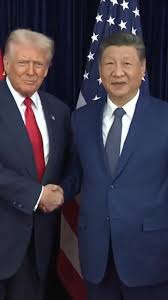
Introduction to the Trump Xi Meeting
The recent meeting between former U.S. President Donald Trump and Chinese President Xi Jinping has garnered significant attention as it highlights the increasingly complex relationship between the United States and China. This encounter comes amid rising geopolitical tensions and economic uncertainties, making the discussions crucial for understanding future diplomatic strategies and international relations.
Overview of the Meeting
Taking place in early November 2023, the Trump Xi meeting was held in San Francisco during the Asia-Pacific Economic Cooperation (APEC) summit. Both leaders aimed to address multiple pressing issues, including trade disputes, military posturing in the Indo-Pacific region, climate change, and human rights concerns.
In a bid to ease tensions, they discussed potential avenues for cooperation, particularly in tackling climate change—a priority for both nations given their substantial contributions to global carbon emissions. Sources indicated that both leaders expressed a willingness to establish mechanisms for dialogue to prevent misunderstandings that could lead to escalation.
Key Issues Addressed
One of the most significant topics on the agenda was trade relations. Trump and Xi reviewed the ongoing trade imbalances which have long been a contentious issue. Analysts believe that an agreement to reduce tariffs could be on the table, providing a much-needed relief to both countries’ economies. Moreover, the leaders addressed the technology rivalry, particularly in semiconductors, which has implications for national security and economic stability.
Another topic that dominated the discussions was security in the South China Sea. Tensions in this strategic waterway have increased, with both nations asserting their military presence. Trump’s emphasis on a balanced approach is seen as a strategic move to avoid military confrontation while maintaining U.S. influence in the region.
Conclusion and Significance
The Trump Xi meeting of November 2023 marked a pivotal moment for international relations, illustrating the necessity of dialogue amid growing tensions. The implications of their discussions could influence not only U.S.-China relations but also global economies and security frameworks. As both leaders navigate a complex political landscape, observers remain hopeful that their willingness to engage in diplomacy may pave the way for a more stable international environment.
Looking ahead, the significance of this meeting underscores the importance of continued dialogue in addressing global challenges. Analysts will be closely monitoring subsequent developments to assess whether the discussions will lead to tangible outcomes that benefit both nations and the international community.