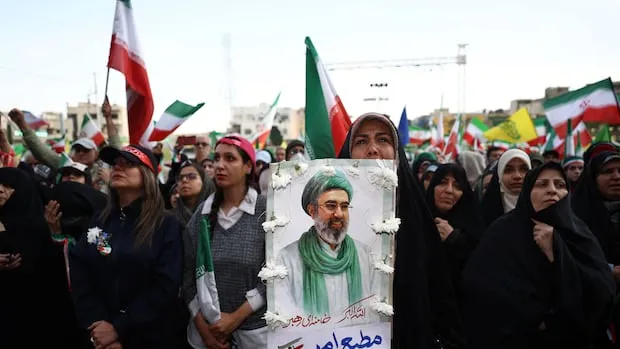
On April 30, 2026, Iran’s Supreme Leader Mojtaba Khamenei declared that Tehran will maintain strict control over the Strait of Hormuz, as tensions escalate with the United States. This critical waterway is vital for global oil supply, with about 20% of the world’s oil and gas passing through it.
The closure of the Strait has already caused significant disruptions, leading to a surge in global energy prices. Brent crude recently peaked at over $126 per barrel. U.S. President Donald Trump is set to receive a briefing on potential military responses, further heightening concerns among local communities reliant on stable energy prices.
The backdrop to this crisis includes a U.S.-Israeli military campaign against Iran, which has fueled fears of an expanded Middle East conflict. Khamenei emphasized that foreign forces have no legitimate claim to the waters of the Strait, stating, “Foreigners who come from thousands of kilometres away … have no place there except at the bottom of its waters.” His comments reflect a broader sentiment in Iran regarding national sovereignty.
As tensions rise, officials from both sides are weighing their options carefully. The U.S. has instituted a naval blockade aimed at crippling Iran’s oil exports, while Iranian officials threaten “long and painful strikes” against U.S. positions if provocations continue.
Key facts about the current situation:
- The Strait of Hormuz remains closed, choking off 20% of the world’s oil and gas supplies.
- Iran’s stockpile includes about 440 kg of uranium enriched to 60 percent.
- The Pentagon estimates that the ongoing war with Iran is nearing a cost of $25 billion.
This conflict not only affects international relations but also local economies dependent on stable oil prices. António Guterres, UN Secretary-General, warned that “the longer this vital artery is choked, the harder it will be to reverse the damage.” The ramifications could be felt far beyond the region.
As reactions unfold, Masoud Pezeshkian stated that any maritime blockade or restrictions imposed by foreign powers would be “doomed to fail,” suggesting a firm resolve from Iranian officials amid these escalating tensions.