Weather Developments in Vancouver
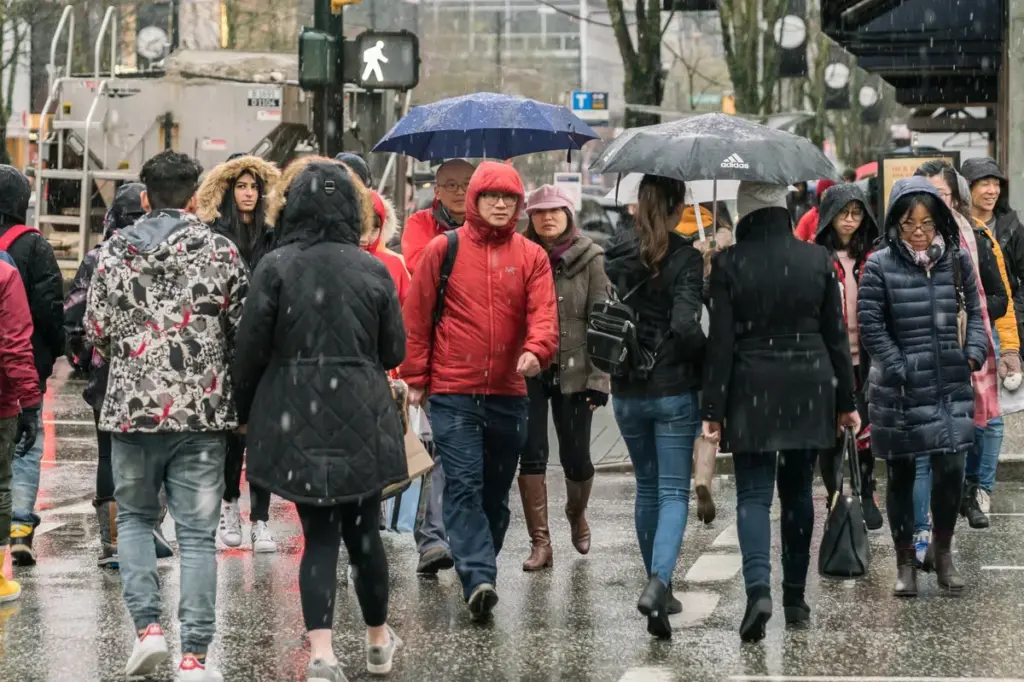
On March 10, 2026, Environment and Climate Change Canada (ECCC) issued a special weather statement for the South Coast, indicating a widespread risk of low-elevation snowfall. This announcement comes as snowflakes have already been reported in various areas around Metro Vancouver, including North Vancouver, Burnaby, and New Westminster.
The forecast predicts that areas near sea level could see up to 4 cm of snow, while higher terrain may receive more than 5 cm. Those traveling along the Sea to Sky Highway should prepare for significant snowfall, with expectations of 5 to 15 cm by Tuesday evening.
Impact on Commuters
Commuters are being warned of potential challenging driving conditions due to the anticipated snowfall. ECCC has advised travelers to allow extra time for their journeys and to prepare for sudden reductions in visibility during heavy flurries. A cold, unstable air mass is responsible for this weather pattern, which has prompted officials to remind residents that winter is not yet finished with Metro Vancouver.
In addition to the snowfall, infrastructure issues are also affecting travel in the region. Repairs have commenced on the deck of the Ironworkers Memorial Bridge, leading to potential delays. Furthermore, rehabilitation work on the Granville Street Bridge south ramps will result in nightly lane closures until early April.
This winter, Vancouver has yet to record a measurable snowfall of at least one centimeter at the city’s airport. If the city does not receive any measurable snowfall this season, it would mark the first time since the winter of 1982-83 that Vancouver has gone snow-free during winter.
As the weather continues to develop, residents and commuters are encouraged to stay informed and prepared for the changing conditions. The situation remains fluid, and details regarding the extent of snowfall and its impact on travel are still unfolding.