“Defendants have not, on this record, explained how, if at all, the injunction interferes with their existing plans for safety and security at the remaining portions of the White House during the construction project,” stated the Appeals Court Majority, reflecting the ongoing legal tensions surrounding the White House state ballroom construction.
The U.S. appeals court recently ruled in favor of allowing the construction to continue until April 17, 2026, despite a lawsuit filed by the National Trust for Historic Preservation. This decision comes as the ballroom project, estimated to cost $400 million, has become a focal point of contention during the Trump administration’s second term.
Judge Richard Leon, who previously ruled that congressional approval is necessary for the ballroom project, emphasized, “The president is the steward of the White House for future generations of First Families. He is not, however, the owner!” This statement underscores the delicate balance between presidential authority and historical preservation.
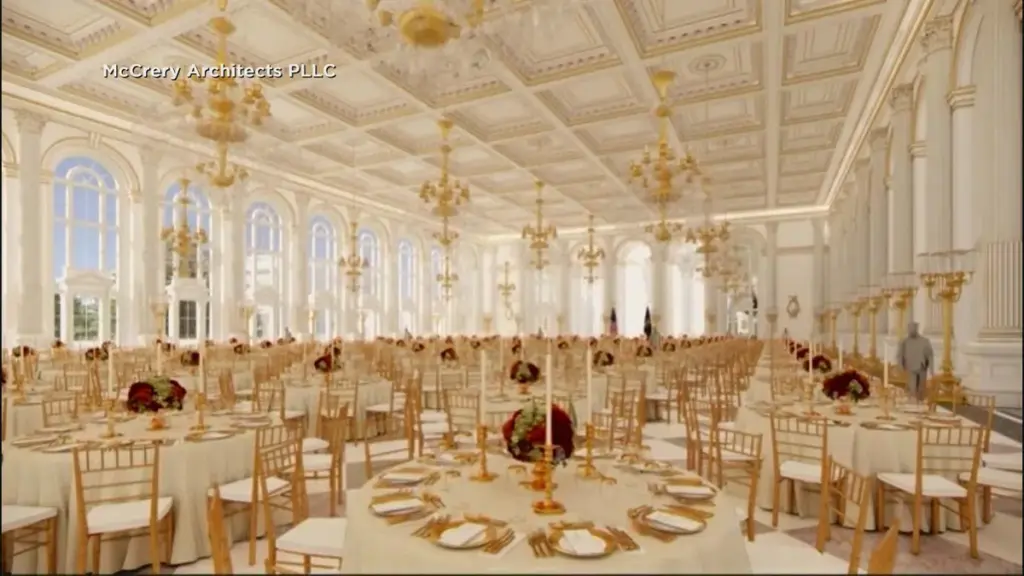
The ballroom, which is expected to take at least two years to build, will occupy a space where the East Wing of the White House was demolished. Critics have labeled the project a “vanity project,” questioning its necessity and the allocation of resources.
In defense of the ballroom, the Trump administration has asserted that no taxpayer dollars are being used for its funding, with a spokesperson stating, “No taxpayer dollars are being used for the funding of this beautiful, desperately needed, and completely secure (for national security purposes) ballroom.” This claim aims to alleviate concerns about the project’s financial implications.
The construction has been described as a passion project for Trump, who has advocated for its necessity in enhancing national security. However, the legal battles continue to cast a shadow over the project, with the National Trust for Historic Preservation expressing their discontent.
Carol Quillen, President of the National Trust, remarked, “We appreciate the court of appeals acting quickly and await further clarification from the district court.” This statement reflects the ongoing dialogue between preservationists and the administration.
Details remain unconfirmed regarding the exact implications of the appeals court’s ruling on the construction timeline. As the project progresses, the community watches closely, hoping for a resolution that honors both the historical significance of the White House and the vision for its future.