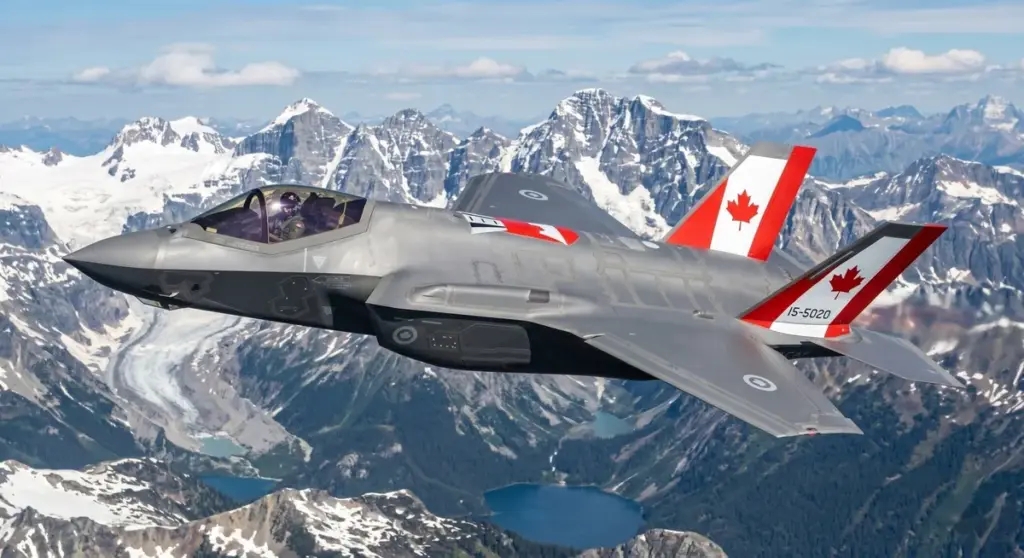
“The review of the purchase of the F-35s is continuing,” said David McGuinty, underscoring the uncertainty surrounding Canada’s military procurement plans. The nation is currently reassessing its $19 billion CAD plan to acquire 88 F-35A Lightning II fighter jets, a decision that could reshape the Royal Canadian Air Force (RCAF) for years to come.
This review began in March 2025, following an agreement signed in early 2023 to purchase the jets. However, Prime Minister Mark Carney’s directive for a thorough evaluation has delayed progress. Canada has secured funding for the first 16 F-35s and made payments to maintain production slots for additional aircraft, but a timeline for finalizing the deal remains elusive.
The backdrop of this situation includes growing concerns over global security, particularly with countries like Russia and China increasing their military capabilities. In response, Germany and Finland have expedited their own F-35 procurements. RCAF officials assert that the F-35 remains Canada’s best option for a fifth-generation fighter, essential for operations within NORAD.
Meanwhile, Saab has proposed an alternative by offering Gripen fighter jets and suggesting that they could be assembled in Canada. This proposal includes transferring significant intellectual property and promises to support approximately 12,500 Canadian jobs. The competition between these two options highlights public sentiment pushing policymakers to reconsider reliance on U.S. defense systems.
Key facts:
- Canada’s F-35 program aims to replace the aging CF-18 fleet of the RCAF.
- Canada has already secured contracts worth 3 billion CAD with over 110 Canadian companies through the F-35 program.
- The HIMARS deal with the U.S., estimated at 2.4 billion CAD, is part of a broader military procurement strategy.
- Officials have not disclosed how many HIMARS systems will be acquired or when they might be delivered.
As discussions continue, stakeholders await clarity on how this strategic decision will unfold. The next expected development will likely focus on further evaluations of both the F-35 and Gripen proposals, as well as how these decisions align with Canada’s overall defense strategy.