Introduction
Prediction markets have gained traction in recent years, providing a unique platform for individuals to bet on the outcomes of various events. One of the leading platforms in this space is Polymarket, a decentralized prediction market that has caught the attention of investors, analytics enthusiasts, and the general public. With its innovative approach, Polymarket not only empowers users to predict various events but also harnesses collective knowledge to offer insights into potential future outcomes. Understanding the mechanics and developments of Polymarket is crucial for investors and analysts seeking to navigate the evolving landscape of prediction markets.
What is Polymarket?
Founded in 2020, Polymarket leverages blockchain technology to create a true decentralized marketplace where users can place bets on the outcomes of various events, from political elections to sports results. Each market operates on the principles of supply and demand; predicted outcomes can be bought and sold, with prices constantly adjusting based on market sentiment. Users access the platform using cryptocurrency, adding to its allure by minimizing traditional banking restrictions.
Recent Developments
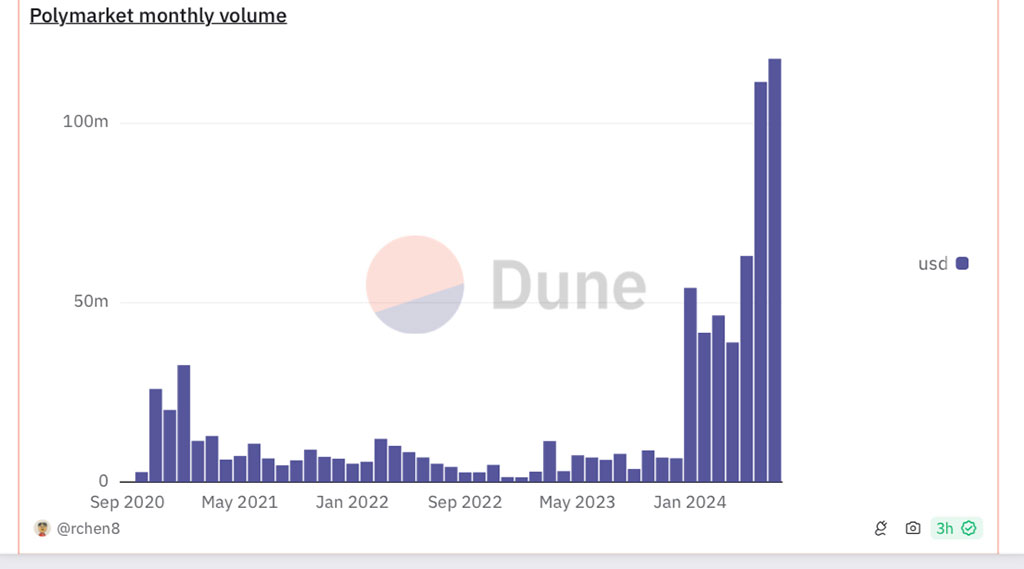
As of October 2023, Polymarket has witnessed a surge in interest, particularly around significant global events like elections in major countries and the outcomes of significant court rulings. In September, Polymarket introduced new markets, offering predictions on the 2024 U.S. Presidential Election. Users can engage in markets like whether a candidate will win a state or who the primary nominees will be. Additionally, the platform has made strides in user interface improvements, making it easier for individuals unfamiliar with blockchain technology to participate in these markets.
Implications of Prediction Markets
Polymarket’s approach is not just about gambling; it encourages a better-informed public. By pooling diverse perspectives from thousands of participants, prediction markets can often provide more accurate forecasts than traditional polling methods. Academic studies increasingly endorse these platforms, observing their potential in political science, economics, and sociology. The ability to predict outcomes accurately has implications for everything from investment strategies to public policy formulation.
Conclusion
As the digital landscape evolves, platforms like Polymarket may redefine how society engages with predictions of future events. Their decentralized nature promotes transparency and allows for a wider range of participants to contribute their insights. The continued growth of Polymarket signifies a shift towards a more interactive and informed approach to understanding trends and possible future events. As we approach pivotal moments like the 2024 elections, the insights gained from Polymarket could prove invaluable for stakeholders in various sectors. For anyone interested in the intersection of technology, economics, and social forecasting, Polymarket is undoubtedly a platform to watch.