Introduction
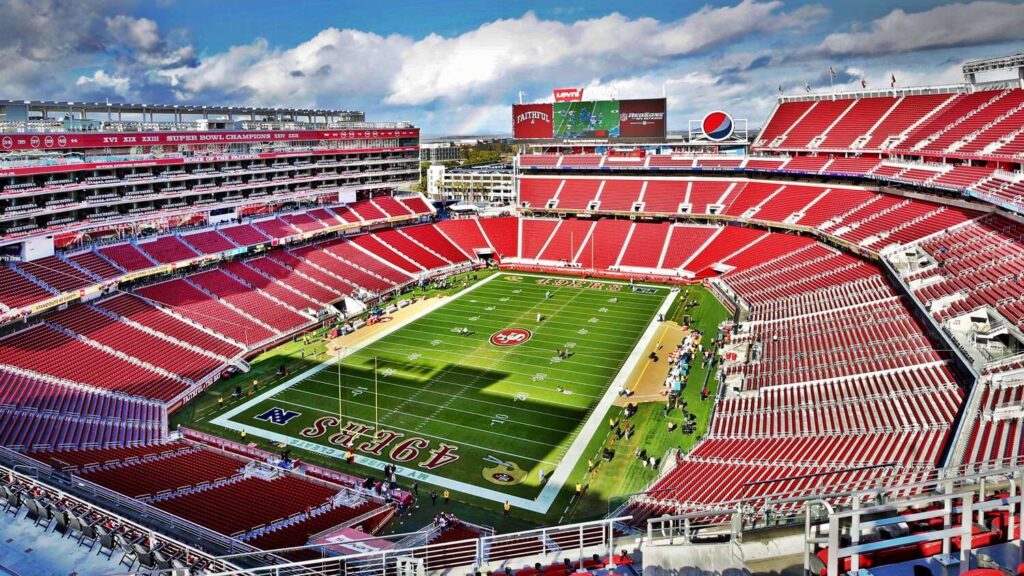
Levi’s Stadium, home to the NFL’s San Francisco 49ers, is a crucial venue for sports and entertainment in California. Opened in 2014, the stadium has become a focal point for major events, including the Super Bowl and concerts. Understanding its location, amenities, and significance adds to our appreciation of this modern architectural marvel.
Location
Levi’s Stadium is situated in Santa Clara, California, approximately 40 miles south of San Francisco. The exact address is 4900 Marie P. DeBartolo Way, Santa Clara, CA 95054. The stadium’s strategic location near major highways, such as U.S. Route 101 and State Route 237, allows for convenient access from various parts of the Bay Area. The proximity to San Jose International Airport also makes it an ideal location for visitors coming from afar.
Importance and Impact
Since its inauguration, Levi’s Stadium has played a vital role in the sports culture of the region. It has a seating capacity of over 68,500, making it one of the largest stadiums in the NFL. Beyond football, the venue has hosted high-profile events, including the Super Bowl 50 in 2016, the College Football Playoff National Championship, and numerous concerts featuring globally renowned artists. The stadium incorporates advanced technology and sustainability features, such as solar panels, which reflect a growing trend towards eco-conscious facilities.
Future Developments
As the world continues to navigate changes in event hosting and attendance, Levi’s Stadium is positioned to adapt to new trends. Officials are exploring options to expand its role, potentially hosting more diverse events such as esports tournaments and large-scale festivals. The continued investment in infrastructure and technology will ensure that Levi’s Stadium remains relevant in the competitive landscape of sports venues.
Conclusion
Levi’s Stadium is more than just a stadium; it is an emblem of community spirit, technological advancement, and entertainment. Its prime location in Santa Clara serves as a hub for local and visiting fans. As the stadium continues to host prestigious events and adapt to the evolving landscape of sports and entertainment, it will remain an essential part of California’s cultural fabric.