Introduction
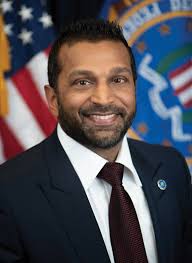
Kash Patel has emerged as a significant figure in U.S. politics, garnering attention for his roles in government and advocacy for national security reform. His influence has grown notably in recent years, particularly during his tenure in the Trump administration, where he served in various capacities including as a senior advisor to the then-President. Understanding Patel’s background, contributions, and ongoing initiatives provides insight into contemporary political dynamics and the evolving landscape of American governance.
Background and Career
Kash Patel was born in 1986 to Indian immigrant parents. He attended the University of Florida, where he earned his degree in Political Science, followed by a Juris Doctor from the New York Law School. His career began in the U.S. Department of Justice as a terrorism prosecutor, a role that positioned him at the intersection of legal expertise and national security concerns.
During the Trump administration, Patel played a crucial role as Deputy Assistant to the President and the Chief of Staff to the Acting Director of National Intelligence. His work focused heavily on intelligence operations and oversight, where he was influential in controversial decisions that aimed to reshape how intelligence was handled and disseminated. His stance on disclosing information regarding investigations into the 2016 election interference has marked him as a polarizing but impactful player in recent political history.
Current Activities and Influence
As of 2023, Patel continues to be an active voice in political discourse, participating in various media appearances and political events. He has been vocal about the need for reforms in U.S. intelligence protocols and has issued critiques regarding the handling of inquiries into the Biden administration’s activities.
Patel’s current project includes authoring a book where he discusses his experiences in the Trump administration, as well as offering a narrative on the importance of transparency and accountability in government operations. His commentary often resonates with a segment of the Republican base that is focused on America First policies and national sovereignty.
Conclusion
Kash Patel exemplifies the rising influence of individuals who leverage their connections and expertise in national security to shape political narratives. As he continues to engage in public discourse, his perspectives on intelligence reform and accountability are expected to remain significant in shaping the Republican Party’s agenda leading up to the 2024 elections. For observers of U.S. politics, Patel represents both a continuing trend of outsider influence and the complex interplay of governance and national security interests. Understanding his actions and motivations can provide valuable context for future political developments.