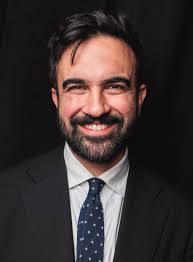
Introduction to Mamdani’s Contributions
Mahmood Mamdani, a prominent Ugandan academic and political commentator, has significantly influenced contemporary discussions surrounding education and political theory. His work spans decades and regions, blending themes of colonialism, nationalism, and governance. In an era where education and political dialogue are pivotal to social change, understanding Mamdani’s contributions has never been more relevant.
Mamdani’s Academic Journey
Born in 1946 in Kampala, Uganda, Mamdani pursued higher education in both Uganda and the United States, earning his PhD from Harvard University. His groundbreaking work often examines how global historical injustices impact contemporary societies, particularly in post-colonial contexts. Notably, his books, such as “Citizen and Subject” and “Good Muslim, Bad Muslim,” provide critical insights into the complexities of identity, citizenship, and governance.
Key Themes in Mamdani’s Work
One of Mamdani’s most significant contributions lies in his analysis of the colonial legacy on contemporary governance structures in Africa and the Global South. He argues that many current political issues are direct results of colonial administrative practices, which sought to fragment societies and institutionalize power hierarchies. His advocacy for a unified approach to education that addresses these injustices has sparked debates on curriculum reform in higher education institutions.
Influence on Political Discourse
Mamdani’s critique of Western liberalism, particularly in response to the War on Terror, continues to reverberate throughout political discourse. He challenges binary narratives that paint conflicts as mere good versus evil, urging for a nuanced understanding that considers historical contexts. Through public lectures, essays, and media appearances, Mamdani has consistently advocated for a rethinking of foreign policy that promotes equity and inclusivity.
Significance and Future Outlook
As issues of social justice, racial equality, and educational reform remain at the forefront of global discourse, Mamdani’s insights are invaluable. His work encourages a critical examination of systems of power and the importance of inclusive governance structures. Looking ahead, it is likely that Mamdani will continue to influence both academic and public spheres, with a growing emphasis on intersectionality in political and educational thought.
Conclusion
Mahmood Mamdani’s contributions transcend traditional academic boundaries, urging both scholars and policymakers to reflect on the past as they navigate present challenges. As education and politics become increasingly intertwined, Mamdani’s lasting impact serves as a reminder of the importance of historical context and inclusivity in shaping equitable societies.