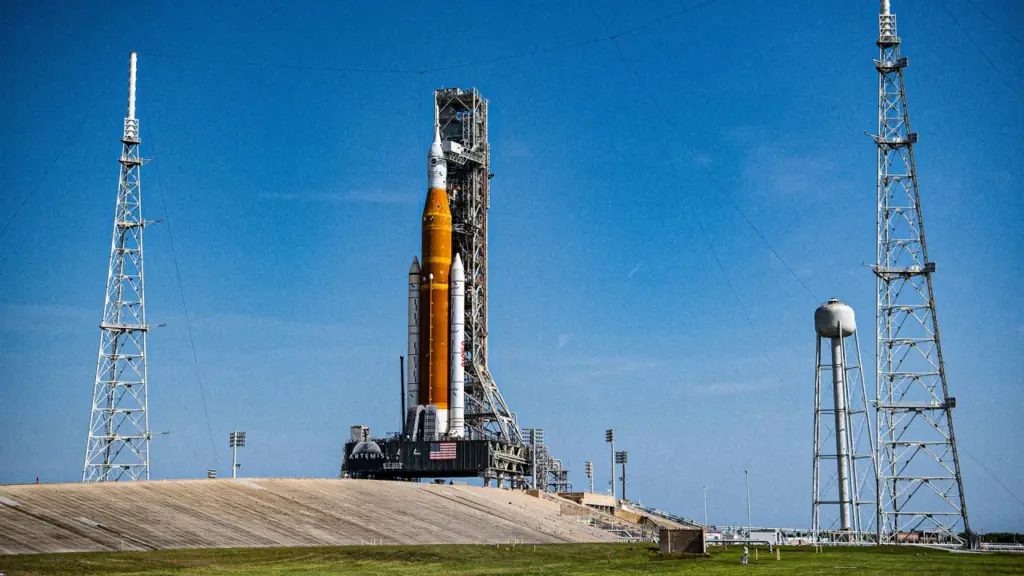
Introduction to NASA’s Artemis Program
The NASA Artemis launch represents a pivotal moment in space exploration history. This ambitious program aims to return humans to the Moon by 2024 and lays the groundwork for future missions to Mars. The significance of this initiative cannot be overstated as it seeks to foster international partnerships, enhance scientific knowledge, and inspire a new generation of explorers.
Key Developments in the Artemis Program
On August 29, 2022, NASA conducted a highly anticipated test flight of the Artemis I mission, launching the Space Launch System (SLS) rocket from the Kennedy Space Center in Florida. The unmanned Orion spacecraft successfully orbited the Moon before returning to Earth, marking a crucial step towards future crewed missions. This mission, while uncrewed, tested essential systems and confirmed the viability of the technologies designed for human spaceflight.
Following the success of Artemis I, NASA outlined plans for Artemis II, which aims to send astronauts around the Moon and back. Scheduled for 2024, this mission will provide invaluable data on human and spacecraft interactions in deep space. In addition, Artemis III, expected in 2025, is ambitious as it intends to land astronauts on the lunar South Pole, a region believed to contain water ice crucial for future exploration.
International Collaboration and Scientific Goals
The Artemis program is not only a NASA initiative but a collaborative endeavor with international space agencies, including the European Space Agency (ESA), the Canadian Space Agency (CSA), and the Japan Aerospace Exploration Agency (JAXA). This partnership aims to establish a sustainable presence on the Moon, drive scientific research, and test technologies that will be essential for future Mars missions.
Moreover, the scientific goals of the Artemis missions include conducting experiments in lunar geology, studying the Moon’s resources, and testing new technologies, such as in-situ resource utilization which could one day facilitate human life on Mars.
Conclusion: The Future of Lunar Exploration
The NASA Artemis launch and its related missions are not only a testament to human ingenuity and perseverance but also a gateway to our future as a space-faring species. As the world watches these historic milestones unfold, the Artemis program serves as an anchor for collaboration among nations, fostering a collective vision toward humanity’s next steps in space. With the advancements set in motion by Artemis, the possibilities for lunar and Martian exploration are brighter than ever, igniting hopes for future generations to live and work off-planet.