Introduction
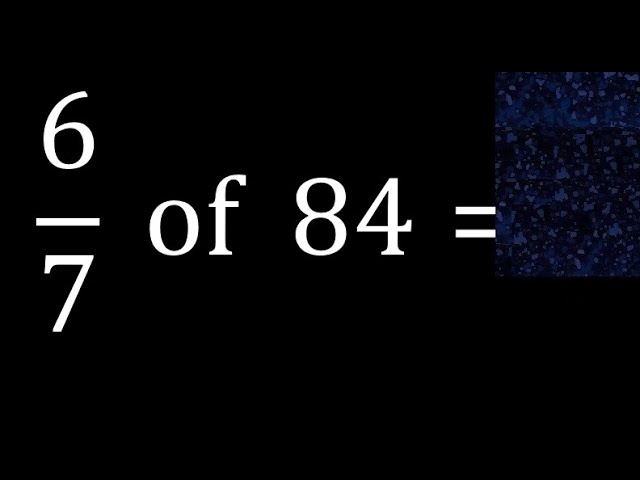
The numbers 6 and 7 can hold various meanings depending on the context in which they are used. In mathematics, they are often simply seen as digits or numbers, but they can also represent concepts in different fields such as statistics, probabilities, and even gaming. Understanding the implications and importance of these numbers can offer insights into broader mathematical concepts and practical applications.
Mathematical Significance of 6 and 7
In the realm of mathematics, the numbers 6 and 7 represent consecutive integers. This relationship is foundational in various operations and mathematical principles:
- Basic Arithmetic: For instance, when added together (6 + 7), the result is 13, which is significant in elementary mathematics as it introduces students to concepts of addition.
- Probability: The numbers can also play crucial roles in probability scenarios. For instance, in a game involving dice, the probability of rolling a 7 with two dice has a specific calculated probability that serves as a teaching tool in statistics.
- Numerical Patterns: They can also illustrate patterns in number theory and sequences.
Cultural Contexts of 6 and 7
Outside pure mathematics, the numbers 6 and 7 can find significance in cultural and symbolic contexts. In many cultures, these numbers have various meanings:
- Six: Often viewed as a number representing harmony and balance. In some cases, it may also carry negative connotations, such as in the case of “666” which is often associated with superstition.
- Seven: Regarded as a number of perfection or completeness in many traditions. The phrase ‘seventh heaven’ and the seven wonders of the world illustrate the esteem in which this number is typically held.
Conclusion
In conclusion, the numbers 6 and 7 serve as more than just digits in a numerical system; they embody a range of significance across different fields and cultures. Their straightforward arithmetic relationship is a springboard into deeper mathematical concepts, while their varied cultural meanings offer a glimpse into our collective psyche and perceptions. As students, educators, and curious individuals explore these numbers, understanding their relevance can lead to broader insights in both mathematics and cultural studies.